
 >


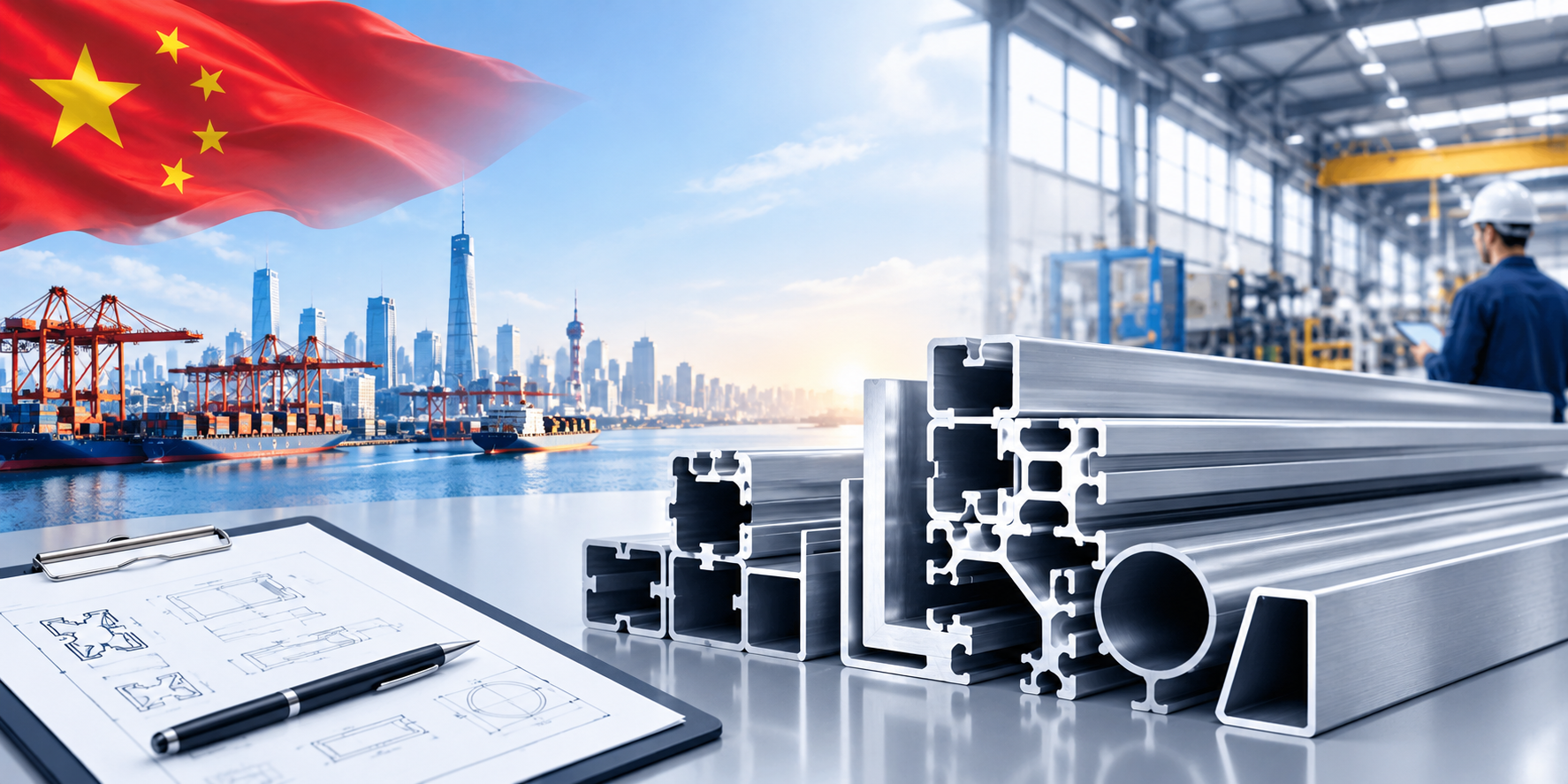
The best aluminum profile manufacturer in China is one that can prove its quality with documents, test reports and real production records, not just a good price. To choose one, verify that the factory owns its extrusion presses and die shop, holds ISO 9001 (and any industry certificates you need), can match your alloy, temper, tolerance and finish, and is willing to run samples before you commit to a full order.
For importers, builders, OEM brands and distributors, finding a dependable aluminum profile manufacturer in China can lower unit costs significantly compared with many local sources. It can also expose you to inconsistent quality, hidden trading-company markups and missed delivery dates if you skip due diligence. China produces more aluminum extrusions than any other country, so there are thousands of choices, and they are not equal.
This guide gives you a practical, step-by-step checklist for choosing an aluminum profile supplier in China. Each step explains what to check, what to ask and what a good answer looks like. Use it to shortlist suppliers, compare quotations fairly and avoid the most common sourcing mistakes.
Why Source Aluminum Profiles from China?
China is the world's largest aluminum extrusion market, and its supply chain covers everything from billet casting to anodizing and CNC machining under one roof. Buyers choose a China aluminum profiles manufacturer for four main reasons:
- Scale and range: Large clusters in Guangdong, Jiangsu, Shandong and Zhejiang offer standard and custom profiles for windows, curtain walls, solar frames, industrial automation, LED lighting, EV parts and furniture.
- Competitive pricing: Integrated supply chains, large press fleets and efficient tooling keep unit prices low, especially on medium to high volumes.
- Customization: Many factories cut new dies quickly and offer OEM and ODM service, from design review to finished, packed parts.
- One-stop processing: Cutting, drilling, punching, bending, welding, surface treatment and assembly can often be done by one supplier.
The trade-off is variation. A top-tier factory and a small workshop may both call themselves a manufacturer, so the rest of this checklist focuses on how to tell them apart.
Aluminum Profile Manufacturer Checklist (Quick Version)
Use this 10-point checklist as a first filter. A supplier that cannot answer most of these clearly should not make your shortlist.
- Factory ownership: Does the company own extrusion presses and a die shop, or is it a trading company?
- Business license and scope: Is aluminum extrusion listed as its registered business activity?
- Certifications: ISO 9001 at minimum, plus ISO 14001, IATF 16949 or finish certificates if your market requires them.
- Material control: Does it use verified billet and issue chemical and mechanical test reports?
- Technical match: Can it hold your alloy, temper, tolerance and surface finish requirements?
- Capacity: Press tonnage, monthly output and on-time delivery record.
- Samples and tooling: Clear die cost, die lead time and a sample approval process.
- Quotation clarity: Itemized price per kg or per meter, plus tooling, finishing, packing and shipping terms.
- Communication: Fast, specific, engineer-level answers in English.
- References and export experience: Proof of shipments to your region and customers you can contact.
The sections below explain how to check each point in detail.
Step 1: Define Your Requirements Before You Contact Anyone
A supplier can only quote accurately if you give clear inputs. Prepare a short requirements pack before you send a single inquiry:
- Drawings: 2D PDF and CAD files (DWG, DXF or STEP) with critical dimensions and tolerances marked.
- Alloy and temper: For example 6063-T5 for architectural profiles or 6061-T6 for structural parts.
- Surface finish: Mill finish, anodizing, powder coating, wood grain transfer, electrophoresis or brushing, with color and thickness targets.
- Quantity and schedule: Expected order size per profile, annual volume and required delivery date.
- Standards and application: Target market standard (such as EN 755, ASTM B221 or GB/T 5237) and the end use, such as outdoor, structural or decorative.
- Secondary processing: Cutting, CNC machining, punching, thermal break or assembly.
Good suppliers respond to a complete pack with design-for-manufacturing feedback, such as wall thickness changes or die suggestions. A supplier that only replies with a price and no questions is often not reviewing your drawing at all.
Step 2: Verify It Is a Real Aluminum Profile Manufacturer
The aluminum profile supplier china you want is a factory, not a middleman. Trading companies can be useful, but you should know which one you are dealing with because it affects price, control and accountability. To verify:
- Ask for the business license and check that extrusion or aluminum products manufacturing is in the registered scope.
- Request a factory video call that shows presses, die ovens, aging ovens, cutting lines and the finishing workshop live, not a pre-recorded tour.
- Ask for the press list with tonnage (commonly from several hundred to several thousand tons) and the number of lines.
- Confirm whether dies are made in-house or outsourced, since in-house die shops shorten sampling time and fix problems faster.
- Order a third-party audit (SGS, Bureau Veritas, TÜV or Intertek) for large or long-term projects.
A genuine factory is happy to show its operation. Reluctance to do a live video call is a warning sign.
Step 3: Check Certifications and Quality Control
Certificates show that a factory has a documented system, but only inspection records show that it follows one. Check both.
| Certificate or standard | What it tells you |
|---|---|
| ISO 9001 | The factory runs a documented quality management system |
| ISO 14001 | Environmental management is in place |
| ISO 45001 | Workplace health and safety management |
| IATF 16949 | Suitable for automotive supply chains |
| Qualicoat or Qualanod | Approved coating or anodizing quality for architectural finishes |
| AAMA 2603 / 2604 / 2605 | Performance levels for painted architectural aluminum |
Ask to see the certificate number, scope, issuing body and expiry date, then verify it with the certification body when possible.
Then look at the day-to-day controls:
- Incoming material: Billet chemical composition reports for each batch.
- In-process checks: Dimension checks at the press exit, straightness control and aging oven records.
- Final inspection: Mechanical properties (tensile strength, hardness), wall thickness, coating thickness, color difference and salt spray results where relevant.
- Traceability: Batch numbers that link each bundle to its billet and production date.
A reliable supplier will share a sample inspection report and test certificate without being asked twice.
Step 4: Confirm Technical and Finishing Capabilities
A good aluminum profile supplier in China for one product may be a poor fit for another. Match the supplier's strengths to your actual part:
- Profile complexity: Hollow, semi-hollow and multi-cavity shapes need experienced die design and tighter process control than simple solid bars.
- Size range: Check the maximum circumscribed circle (CCD) of the presses and the maximum profile length.
- Tolerances: Ask whether the factory can meet standard or precision tolerance classes such as EN 12020-2, and request real measurements from previous parts.
- Alloy range: Common series are 6063, 6061, 6005 and 6082. Confirm the factory has run your alloy and temper before.
- Surface treatment: Check that anodizing, powder coating or electrophoresis is done in-house or by an audited partner, and ask for typical film thickness. As a rough guide, architectural anodizing is often 10–20 microns and powder coating about 60–80 microns, but your specification decides.
- Fabrication: CNC machining, drilling, bending and thermal break assembly in one place reduce handling damage and lead time.
Ask for photos or samples of similar profiles the factory has produced. Experience with your shape and finish matters more than the longest equipment list.
Step 5: Evaluate Capacity, MOQ and Lead Time
A factory that is too small may miss your deadline, and one that is too large may not prioritize a modest order. Look for a supplier whose capacity fits your volume.
- Capacity: Ask for monthly output in tons, the number of presses and the current utilization rate.
- MOQ: Minimum order quantities are usually set per profile and per color, often starting from several hundred kilograms or around one ton. Confirm whether the MOQ applies to mill finish and finished profiles alike.
- Lead time: Separate die making, sampling and mass production. Die making commonly takes about a week or two, and production often takes a few weeks depending on finish and quantity. Ask for actual dates, not general promises.
- On-time record: Request on-time delivery data or customer references in your market.
- Contingency: Ask what happens if a press breaks down, or if peak season fills the schedule.
A clear production plan with dated milestones is a strong sign of a well-run factory.
Step 6: Approve Tooling and Samples Before Mass Production
Never place a full order based only on a drawing and a quotation. The tooling and sample stage is where most problems show up, and where they are cheapest to fix.
- Die confirmation: Get the die drawing or a profile cross-section with tolerances for sign-off.
- Die cost terms: Ask whether the die fee is charged once, refunded after a set order volume, or shared. Die ownership should be clear in writing.
- First article samples: Inspect dimensions, straightness, surface, temper hardness and fit with your mating parts.
- Finish samples: Approve color, gloss and coating thickness on a finished sample, ideally with a physical color reference.
- Written approval: Record the approved sample as the reference standard for all later batches.
Keep a retained sample at your end. If a dispute arises later, an approved sample and its test data protect both sides.
Step 7: Compare Quotations Fairly
The lowest price is rarely the lowest cost. Two quotations can look 10% apart simply because they assume different alloys, wall thicknesses or coating specifications. Ask every supplier to quote the same specification and to itemize:
- Price per kg or per meter, and how it is calculated (theoretical weight vs. actual weight)
- Alloy, temper and tolerance class
- Surface treatment type and thickness
- Die fee and its refund policy
- Cutting, machining and packing charges
- Incoterm (FOB, CIF or DDP), port of loading and payment terms
- Quotation validity period, since aluminum prices follow the LME and regional premiums
Be careful when one quotation is far below the others. Common causes are thinner walls, off-grade or recycled billet, thinner coatings or tolerance relaxations that only appear after an order. Ask the supplier to explain the gap before you decide.
Step 8: Judge Communication, Packaging and Export Experience
The way a supplier communicates before the order is the best preview of how it will behave after it.
- Responsiveness: Do you get specific answers within one working day, from someone who understands extrusion?
- Engineering support: Does the team suggest improvements, such as better wall thickness, radii or die layout?
- Packaging: Profiles scratch easily. Ask about protective film, paper interleaving, plastic bags, wooden crates or pallets, and bundle weights.
- Export documents: Confirm they can supply the commercial invoice, packing list, certificate of origin and test reports, and that they know your market's import rules.
- Shipping experience: Ask which countries they ship to, how they handle container loading and whether they work with reliable forwarders.
- After-sales service: Agree in advance how claims, replacements and quality disputes are handled.
A supplier with real export experience will already know your common requirements and will usually offer solutions before you ask.
Red Flags to Avoid When Choosing a China Aluminum Profile Supplier
Walk away, or ask for more proof, if you see any of these:
- The supplier refuses a live factory video call or third-party inspection.
- Certificates are expired, unreadable or do not match the company name.
- The price is far below every other quotation with no technical explanation.
- No test reports, or reports that look identical for different batches.
- Pressure to pay the full amount in advance, or payment requests to a personal account.
- Vague answers about alloy, temper, coating thickness or tolerances.
- No written approval step for samples and dies.
- Different company names on the invoice, license and bank account.
Supplier Evaluation Scorecard
Score each shortlisted supplier from 1 (weak) to 5 (strong) and multiply by the weight. The highest total is usually the best overall fit, not just the cheapest.
| Criteria | Weight | What to look for |
|---|---|---|
| Factory verification | 15% | Own presses, die shop, live video audit |
| Quality system and certificates | 20% | ISO 9001, test reports, traceability |
| Technical capability | 20% | Alloy, tolerance and finish match |
| Capacity and lead time | 15% | Press fleet, dated production plan |
| Price transparency | 10% | Itemized quote, clear die terms |
| Communication and engineering support | 10% | Fast, specific, helpful replies |
| Export and packaging experience | 10% | Documents, protection, references |
FAQ: Choosing an Aluminum Profile Manufacturer in China
How do I find a reliable aluminum profile manufacturer in China?
Start with a shortlist from trade platforms, industry exhibitions and referrals. Then verify each candidate with a business license check, a live factory video call, certificates and sample inspection reports. Reliable factories show their presses, die shop and test lab openly.
What is the difference between an aluminum profile manufacturer and a trading company?
A manufacturer owns the presses and controls production. A trading company buys from factories and resells, which can add a margin and reduce direct control over quality. Both can work, but you should know which one you are paying and who is responsible for defects.
What certifications should an aluminum profile supplier in China have?
ISO 9001 is the baseline. Add ISO 14001 and ISO 45001 for environmental and safety management, IATF 16949 for automotive work, and Qualicoat, Qualanod or AAMA approvals for architectural finishes, depending on your market.
What is the typical MOQ for custom aluminum profiles?
MOQs are usually set per profile and finish, and often start at several hundred kilograms to around one ton. Exact numbers depend on the factory, alloy and surface treatment, so confirm in writing.
How long does it take to get custom aluminum profiles from China?
Plan for die making and sampling first, then mass production and shipping. Die making often takes one to two weeks and production a few weeks, with sea freight added on top. Ask for a dated schedule before you confirm an order.
Who pays for the die or mold?
This varies. Some suppliers charge a die fee up front, some refund it after a target order volume, and some share it. Always agree on the cost, refund terms and die ownership before production.
How can I check the quality of aluminum profiles before shipment?
Approve a sample first, request mill test reports, and consider a pre-shipment inspection by a third party. Check dimensions, straightness, surface quality, hardness and coating thickness against the agreed specification.
Conclusion: Choose on Proof, Not Promises
Choosing the right aluminum profile manufacturer in China comes down to evidence. Verify that the factory is real, check its certificates and test reports, match its technical strengths to your profile, approve tooling and samples in writing, and compare quotations on the same specification. A supplier that welcomes these checks is usually one you can trust with repeat orders.
If you are looking for a dependable aluminum profile supplier in China for custom extrusions, fabrication and finishing, you can explore the NCALU aluminum profile manufacturer in China’s page or send your drawings and requirements for a technical review and quotation.



0 Comments
Leave A Comment